Scouting-related abuse claims produced a settlement measured in billions. The same gaps in federal law apply today to other youth-, elder- and disability-serving organizations. Nothing here claims a product would have prevented any of it.
These costs are already being paid
By victims, taxpayers, insurers and states. None of them is a projection.
Listen to this page under a minute
Loading the Elevenlabs Text to Speech AudioNative Player...
Part 3 of 4 · The Broken Patchwork
$2.48 billion: one organization's settlement
The same gaps in the law apply to many others
Walk me through it · about three minutes
Four costs already paid. Then paid again, every move.
2.48
billion: one organization’s settlement of childhood sexual abuse claims (Third Circuit, 2025)
19
of organizations surveyed worldwide said they re-check after hire (HR.com and PBSA, 2021)
37.75
one Texas fingerprint check for a volunteer or foster applicant, all-in as published; each further check by another league, agency or employer can carry its own fee
Exploitation, unreported abuse, litigation and one $2.48 billion settlement. None of it a projection.
Exploitation, fraud and litigation
What failed screening already costs.
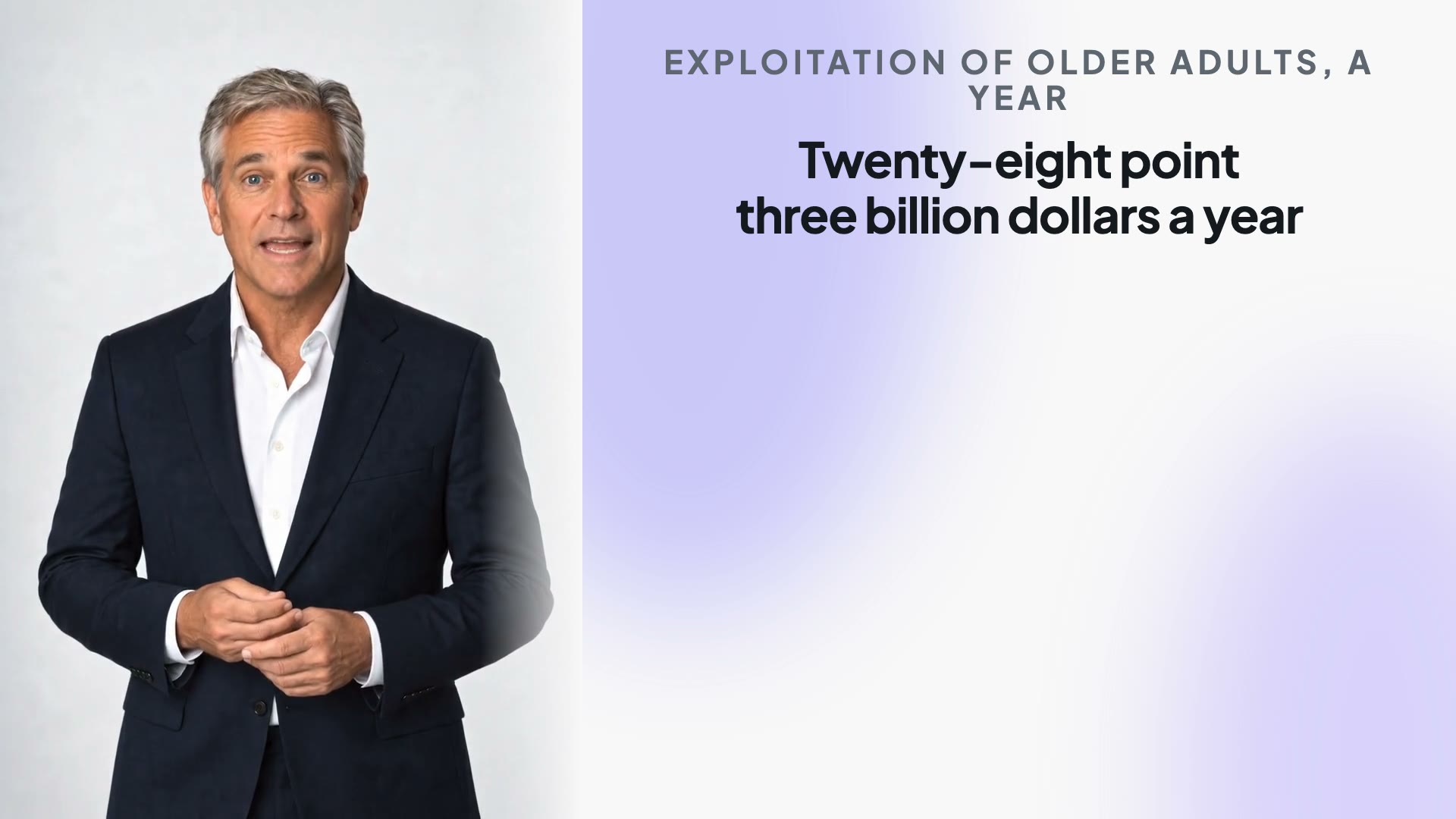
- 01Exploitation of older adults$28.3 billiona year in losses · AARP Public Policy Institute estimate (2023), cited by the National Council on Agingsourced
- 02Elder abuse ever reported1 in 24cases reported to authorities · New York State elder abuse prevalence study, 2011; the true cost is almost certainly highersourced
- 03Nursing-home settlement or award$406,000estimated average per compensated claim, 2001 · as summarized by HHS/ASPE (2006) from Stevenson and Studdert, Health Affairs (2003); secondary source
- 04One organization’s compensation trust$2.48 billion82,209 abuse claims · Third Circuit opinion, May 2025sourced
The four figures as first written, with their sources
- $28.3 billion a year in losses from financial exploitation of older adults · AARP Public Policy Institute estimate (2023), cited by the National Council on Aging
- 1 in 24 cases of elder abuse ever reported to authorities · New York State elder abuse prevalence study, 2011; the true cost is almost certainly higher than official statistics capture
- $406,000 estimated average payment per compensated nursing-home claim, 2001 · as summarized by HHS/ASPE (2006) from Stevenson and Studdert, Health Affairs (2003); secondary source, the article itself not yet checked
- About $2.48 billion in noncontingent assets · 82,209 abuse claims: the Boy Scouts of America settlement trust · Third Circuit opinion, May 2025
Scouting-related abuse claims produced a settlement measured in billions. The same gaps in federal law apply today to other youth-, elder- and disability-serving organizations. Nothing here claims a product would have prevented any of it.
Published prices for screening one caregiver run from $12 to $129.50, and a result does not automatically carry over to the next employer.
A system that cannot reuse its own work
Paid in full, every move.
- 01The highest price we found$129.50New York City child care: $104.50 for fingerprinting plus the $25 state registry check. The FBI’s standard fee is $12 ($15 from October 1, 2026); Florida’s foster-care schedule is $36 before the vendor’s feesourced
- 02Rescreened from scratchFull pricecan happen when a worker changes employers or crosses a state line, even if another organization cleared them weeks earlier; in-state child care rules and some state clearance systems are exceptions
- 03Federal money for state systems$3 millionat most per state, at a 3:1 federal match, under the ACA’s National Background Check Program for long-term care ($1.5 million for states from the earlier pilot); 29 jurisdictions took part 2010 to 2024, and OIG credits it with helping 27 develop programs; participation ended May 31, 2024sourced
- 04NCHIP awards since 1995$1.0 billionabout, FY1995 to 2024, regular awards (excluding 2023 and 2024 supplemental awards), for improving the records a check searches (Bureau of Justice Statistics). It funds the data layer; other federal programs, including child care and foster care funds, can pay for some checkssourced
States and organizations pay repeatedly to rebuild the same work. A verified identity that carries from one organization to the next would need to be built only once; each state and organization would still decide which checks it accepts.
The four figures as first written, with their sources
- $12 to $129.50 published prices for screening one caregiver: $12 where the FBI’s standard fee is the only charge (Hawaii child care; $15 from October 1, 2026) to $129.50 for New York City child care ($104.50 for fingerprinting plus the $25 state registry check); Florida’s foster-care schedule is $36 before the vendor’s fee
- Full price, every move a worker who changes employers or crosses a state line can be rescreened from scratch, even if another organization cleared them weeks earlier; in-state child care rules and some state clearance systems are exceptions
- Up to $3 million per state ($1.5 million for states from the earlier pilot), at a 3:1 federal match, under the ACA’s National Background Check Program to build state screening systems, each required to develop and test a Rap Back capability; 29 jurisdictions took part between 2010 and 2024, and OIG credits the program with helping 27 develop programs; Maryland and Wisconsin withdrew early, and the last two states finished on May 31, 2024
- Almost $1.1 billion since 1995 cumulative NCHIP awards for improving the records a check searches (Bureau of Justice Statistics). It funds the data layer; other federal programs, including child care and foster care funds, can pay for some checks
States and organizations pay repeatedly to rebuild the same work. A verified identity that carries from one organization to the next would need to be built only once; each state and organization would still decide which checks it accepts.
Sources: AARP Public Policy Institute (2023) via the National Council on Aging; New York State Elder Abuse Prevalence Study (2011); Stevenson and Studdert, “The Rise of Nursing Home Litigation,” Health Affairs (2003), via HHS/ASPE (2006); U.S. Court of Appeals for the Third Circuit, Boy Scouts of America bankruptcy opinion (May 2025); FBI CJIS user fee schedule, 91 FR 34655 (2026) and 89 FR 70206 (2024); NYC Department of Investigation, Fingerprint Unit ($104.50 as of January 1, 2026), and N.Y. Soc. Serv. Law 424-a(1)(f); Hawaii DHS 961A instructions; FDLE fee schedule (Jan. 2025); Texas DFPS fees; CMS National Background Check Program; HHS OIG, NBCP Final Assessment (Nov. 2024); Bureau of Justice Statistics, National Criminal History Improvement Program.
What one check costs
From $12 to $129.50 to screen one caregiver.
$12Hawaii child care: the FBI’s fee is the only charge in the state’s instructions; $15 from October 1, 2026
$129.50New York City child care, fingerprinting plus the state registry check
$36Florida$37.75Texas
Published prices for screening one caregiver, read September 2026; they cover different checks, and some include the fingerprinting vendor’s fee and some do not (Florida: foster care, before the vendor’s fee; Texas: volunteer or foster applicant, all-in as published). A person checked separately by each league, agency and employer may be charged each time, unless the organization pays.
Where federal money exists it reaches one sector; most of the screening population is checked with state, county or applicant dollars.
Federal funding, where it exists, is scoped to one sector. The large majority of the screening population, including most of the 75.7 million annual volunteers, is screened, if at all, with state, county or applicant dollars and no federal support.
Sector by sector
Federal money reaches one sector at a time.
- Records infrastructureNCHIP · NARIPAbout $48M to $64M and $18M to $25M a year (FY2020 to 2024), excluding NCHIP supplemental awards in 2023 and 2024
- State-system grants, closed 2024National Background Check ProgramUp to $3M per state at 3:1
- Block grantCCDBG ActTied to CCDF eligibility
- Mandate, no dedicated grantAdam Walsh ActRides on the 50% IV-E match
- Fee limit; grant expiredNCPA · VCA fee limitActual cost only; $20M, 1994–97
- Records infrastructureCross-population record systemsNCHIP · NARIP covers this population.
- Long-term careElderly and disabledNational Background Check Program covers this population.
- Licensed child careRegulated or registered providersCCDBG Act covers this population.
- Foster and adoptive placementsChildrenAdam Walsh Act requires the check and funds nothing.
- VolunteersCharged actual cost onlyNCPA · VCA fee limit covers this population.
- Everything elseFaith-based, youth sports, camps, mentoring, nanniesNo federal programNo federal program.
- Covers this population
- Requires the check, no appropriation
Where federal money exists it is scoped to one sector. The large majority of the screening population, including most of the 75.7 million annual volunteers, is screened, if at all, with state, county or applicant dollars.
The programs, with their funding models and sources
| Program | Administered by | Populations covered | Funding model |
|---|---|---|---|
| NCHIP / NARIP | DOJ, Bureau of Justice Statistics | Cross-population; records infrastructure only | About $48 million to $64 million a year in NCHIP awards and $18 million to $25 million under NARIP (FY2020 to 2024), excluding $106 million in NCHIP supplemental awards in FY2023 and FY2024. Funds improvements to record systems. |
| National Background Check Program | CMS (ACA §6201) | Elderly and disabled; long-term-care settings only | Up to $3 million per state at a 3:1 federal match (up to $1.5 million for states from the earlier pilot). Voluntary for states; 29 jurisdictions took part 2010 to 2024, and OIG credits it with helping 27 develop programs; participation ended May 31, 2024. |
| CCDBG Act | ACF, Office of Child Care | Children; licensed, regulated or registered child care | Mandatory block-grant funding tied to CCDF eligibility. |
| Adam Walsh Act | ACF (Title IV-E) | Children; foster and adoptive placements | No dedicated grant. Rides on the 50% Title IV-E administrative match; enforced through funding-eligibility risk. |
| NCPA / VCA fee limit | DOJ (historical) | Cross-population; volunteers | Volunteers may be charged only the actual cost of a check. The $20 million computerization grant (1994–1997) has expired. |
| Everything else — faith-based, youth sports, camps, mentoring, nannies | None | Children, elderly and disabled | No federal program. State general funds, county budgets or applicant fees only. |
Sources: BJS; CMS; ACF; HHS OIG. CMS’s rate-setting training for Medicaid home- and community-based services (2016) lists background checks among a provider’s administrative costs.

Repeated screenings, paid each time
Verify once, reuse the identity
Protect the vulnerable and build trust at scale.
© 2026 Federal Compliance Systems, Inc. All rights reserved.