The laws exist. The proof does not.

Federal law already sets the core protections for children in foster care and for the people who care for children, older adults and people with disabilities. What is missing is a way to prove, at the time it matters, who the caregivers are and where the children are.

The problem, the film · 2 min 43 s

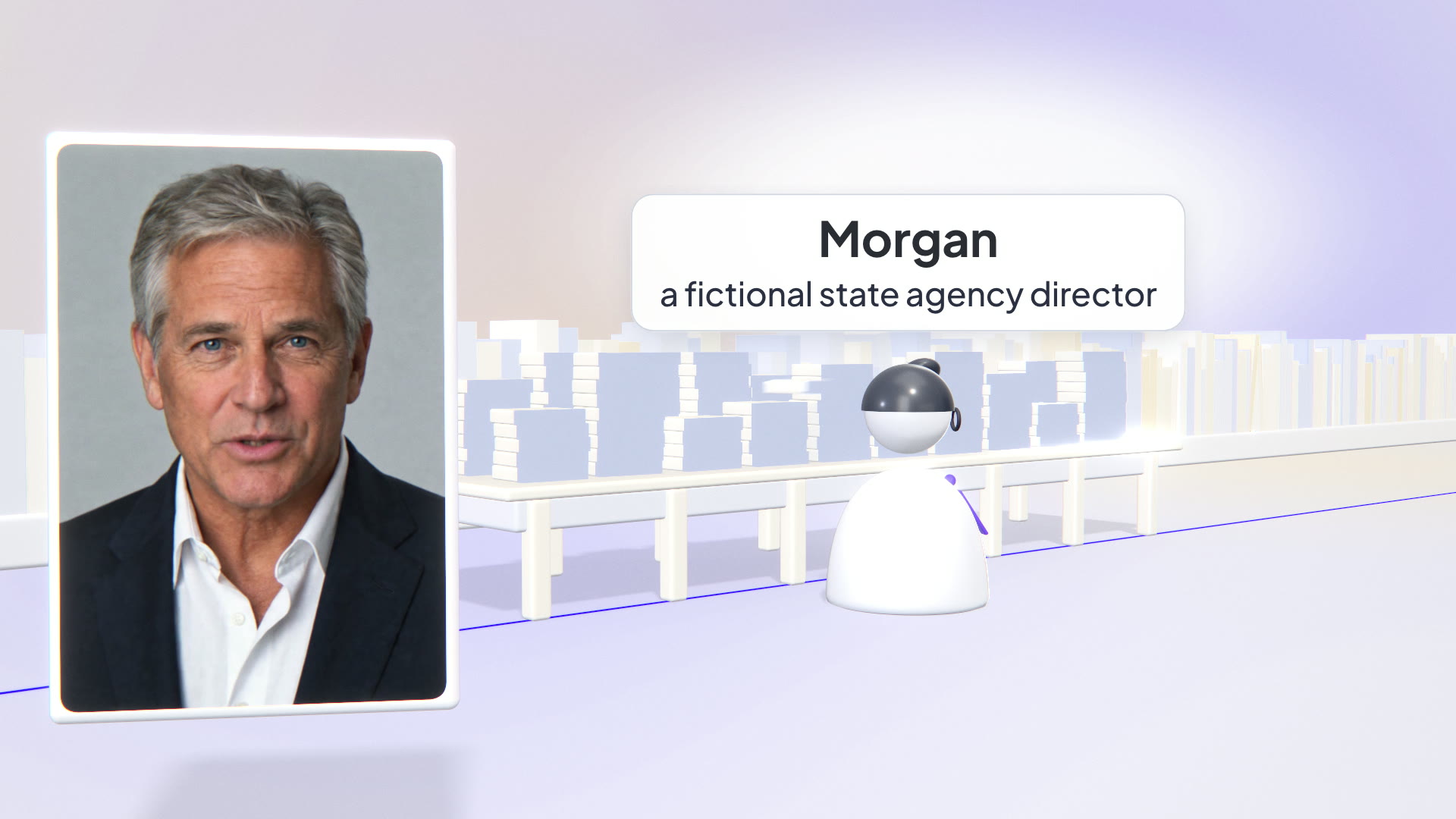
The presenter and the narrator’s voice are generated with AI. The sources for every figure are listed at the bottom of this page.

FComply's catalog counts 28 federal laws since 1965 on the care of children, older adults and people with disabilities. Most of them require no background check.

Since 1965 Congress has passed at least 28 federal laws on the care and protection of children, older adults and people with disabilities, and on background checks. That count is FComply’s catalog, a selection, not an official count.

Most of the 28 require no background check. Where one does, it is a condition on federal funds to states. Read law by law, seven set such conditions, two require checks only inside voluntary long-term care programs, and the 1987 nursing home law requires a nurse aide registry inquiry. Not one of them makes continuous monitoring the rule.

Some checks are firm. Checks on prospective foster and adoptive parents are fingerprint-based by federal law (42 U.S.C. 671(a)(20)(A)). Hiring one child care worker takes at least five checks, and federal law asks for a new one at least once every five years (42 U.S.C. 9858f(d)(3)(B)).

A check describes one name on one day. It says nothing about the years after, and a check by name alone can miss a record when someone gives a false identity.

The standard check runs once, at hire or approval, and is rarely repeated. A name-based check asks whether a name has a record. It cannot tell whether the person in front of you is the person the name belongs to.

Repeating the check finds what the first one could not. When Florida kept checking people already cleared for care work, 1,337 of them lost that clearance after new arrests in 17 months, from January 2013 to May 2014 (HHS OIG, OEI-07-10-00420). Those were arrests, not convictions.

Each organization also runs its own check, so the same person is checked, and pays, again for each new job or volunteer role.

The state agency must report it immediately, and in no case later than 24 hours. Federal auditors estimated that 47 percent of episodes were never reported to NCMEC.

When a state child welfare agency learns that a child in foster care is missing or abducted, it must report the child immediately, and in no case later than 24 hours, to law enforcement for entry into NCIC and to the National Center for Missing & Exploited Children (NCMEC). Twenty-four hours is the outer limit, not a waiting period. The rule is part of every state’s Title IV-E plan (42 U.S.C. 671(a)(35)(B)) and has bound states since September 29, 2016. In 2023, section 137 of Public Law 117-348 added regular communication with law enforcement and NCMEC and, where reasonably possible, a photo, a description and endangerment information.

The HHS Office of Inspector General estimated that 34,869 episodes, 47 percent, were never reported to NCMEC, out of 74,353 episodes of two days or longer in the 46 states that supplied data, July 2018 to December 2020 (A-07-21-06102). Those are estimated episodes, not children. In its sample of 100 episodes, 45 were never reported to NCMEC and 22 were reported late. For the report to law enforcement, a separate audit estimated that 19 percent were not reported as required for NCIC entry (A-07-21-06104).

Of the children missing from foster care reported to NCMEC in 2025, 17 percent were identified as likely victims of child sex trafficking, by NCMEC’s own classification of the reports it received.

The auditors found that state agencies generally lacked adequate systems to show whether they had reported missing children accurately and on time. That is a finding about systems, not about any caseworker.

In forty states, foster care payments could continue after a child went missing. And the same caregiver is often checked, and charged, again and again.

HHS OIG reported in May 2022 that “Forty State agencies reported that their procedures were to continue to make maintenance payments to providers after a child in foster care had gone missing.” These were state-reported procedures, generally to hold the placement, and most stopped within 3 to 30 days (A-07-20-06095, covering July 2018 to December 2020). That money is meant for the child’s care.

Screening is paid for again with each new job or role. As an example, three checks at the 46-state average come to about $180 from October 1, 2026. That is arithmetic on published fees, not a verified saving, and a volunteer’s checks can cost far less or be paid by the organization. Complied ID, as offered, will cost $49 to enroll, government fees included, then $10 a year to renew.

FComply puts no total on the savings. A pilot would measure them first.

Record the moments the law cares about as they happen: who the caregiver is, and where the child is. The program doesn't need a law to work, but it would help if the President finished the current law.

Two things would become records made at the moment they happen. A caregiver would be shown to be who they say they are, and rescreened every year. A child would be shown to be present, with a photo, a place and a time. Complied ID is being built and will work at launch. The Foster Care Compliance System is a solution launching in Q1 of 2027, and it is designed to sit beside the case-management systems states already run.

FComply asks that President Trump direct the attorney general to finish the national check program Congress ordered in 2018 (the Child Protection Improvements Act, P.L. 115-141, a national background check program), which the law said should be fully in place by March 23, 2019. When FComply last checked, on September 27, 2026, the rule the program needs was still not final; the Department of Justice proposed it on August 25, 2023 (88 FR 58167). FComply intends to compete to be one of the program’s designated entities. It has not been designated.

The program doesn’t need a law to work, but it would help if the President finished the current law.

FComply's proposed rollout starts with a pilot: one or two states, eighteen months, judged the way the auditors judge.

This is FComply’s proposed rollout, not an agreement with any state. It starts with about nine months of readiness: legal opinions in the candidate states, a security assessment and published measures. Then comes a pilot in one or two states, with verified results eighteen months after the pilot starts. A regional group of states would follow, and then the other states, territories and tribes at their own budget and procurement pace.

FComply holds no security credential yet. It is working toward these and holds none of them yet.

Sources: every figure on this page is traced to its document, with the supporting sentence quoted, in Supporting Material and in the source library for the film Proven Once. Corrections to info@fcomply.com.