For the people who answer for a child’s safety

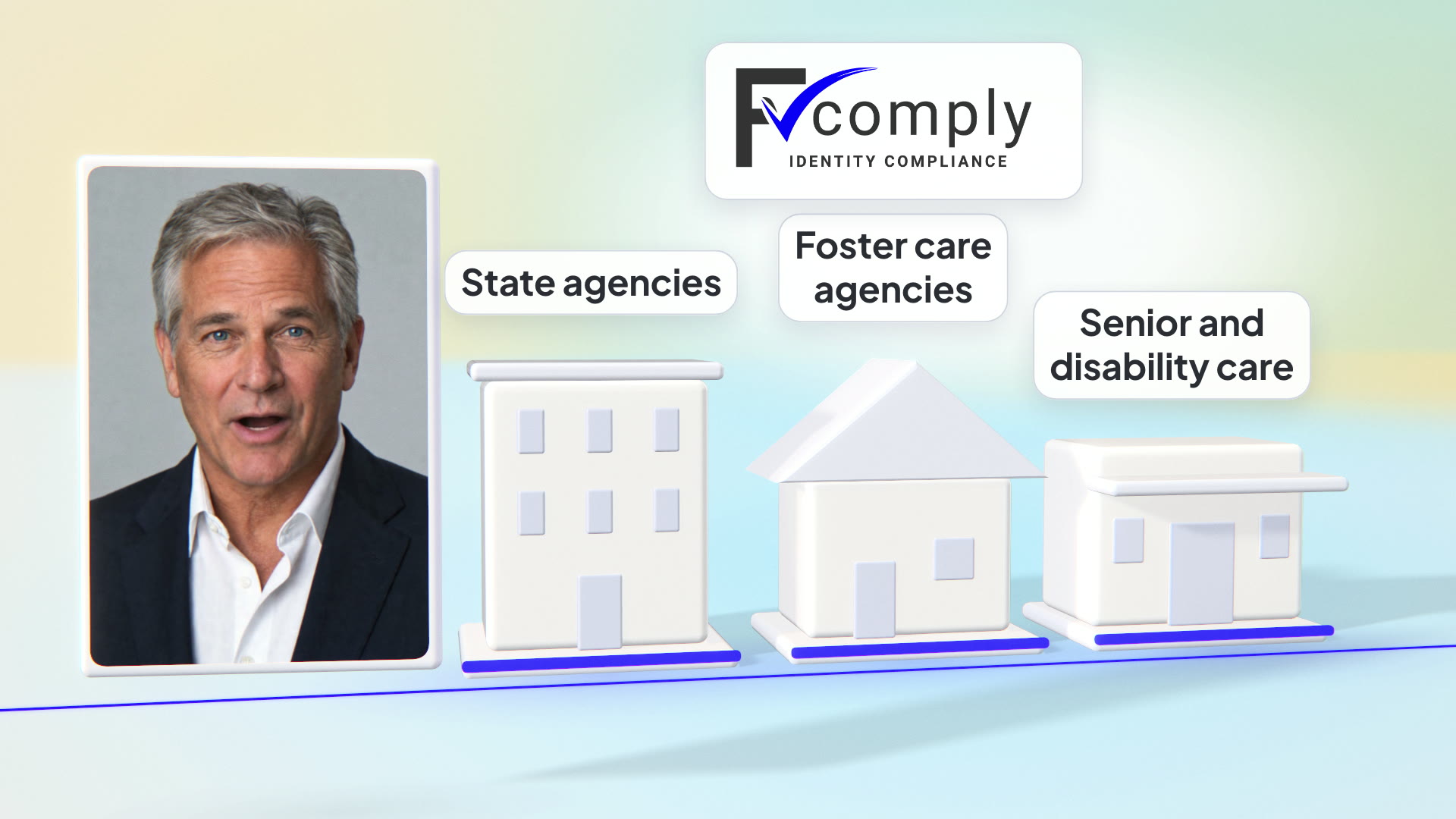
State agencies, foster care agencies, and senior and disability care providers each carry part of the same duty: to know who the caregivers are and, in foster care, where each child is. Here is what FComply is building for each of them.

Who it’s for, the film · 2 min 40 s

Morgan, Erin and Alex are fictional people. The presenter and the narrator’s voice are generated with AI. The sources are listed at the bottom of this page.

A record of each visit, check-in and missing-child report made when it happens, designed to sit beside the case-management system the state already runs.

Your agency carries the federal duties. When a child in foster care goes missing, you must report the child immediately, and in no case later than 24 hours, to law enforcement for entry into NCIC and to NCMEC (42 U.S.C. 671(a)(35)(B)). Checks on prospective foster and adoptive parents are fingerprint-based by federal law (42 U.S.C. 671(a)(20)(A)).

The Foster Care Compliance System is a solution launching in Q1 of 2027. It is designed to record each caseworker visit and each check-in with a photo, a place and a time, and to show the month’s record by county, by caseworker and by child. A missed check-in is designed to reach the caseworker the same day. A missed check-in is not by itself a finding that a child is missing. The decision stays with the agency, and agency staff make the report, from a card that reads “Report to law enforcement (for NCIC entry)”. FComply never files a report.

It is designed to sit beside your case-management system, not to replace it. FComply holds no security credential yet: it is working toward these and holds none of them yet. The check stage is designed to meet the FBI’s CJIS Security Policy, and before launch FComply will publish how long each item is kept and how to delete it.

Caseworkers would record each visit at the door, and foster parents would complete a short check-in, so the record is made as the month goes, not written up afterward.

You supervise the placements, make the monthly visits and answer first when a child cannot be found. Today a visit is often written up afterward, from memory or a paper form, with nothing to show where or when it happened.

The Foster Care Compliance System is designed so the caseworker completes the visit on a phone at the door. The child is matched against the enrollment photo, and the place and time are recorded. Between visits, the foster parent completes a short check-in. A caregiver check-in is never counted as a caseworker visit. If a check-in is missed, the caseworker hears the same day and the agency decides what happens next.

Complied ID is being built so a caregiver can prove who they are on their own phone, and at launch it will screen them and rescreen them every year.

Your caregivers work alone with people who cannot always speak for themselves. A name-based check asks whether a name has a record. It cannot tell whether the person in front of you is the person the name belongs to.

Complied ID is being built and will work at launch. The caregiver proves who they are on their own phone, in about ten minutes, FComply’s estimate for the identity step alone. Then the checks run through authorized agencies, with the person’s written consent. FComply has no authority of its own to obtain FBI records, and the face match never replaces fingerprints where the law requires them. At launch, FComply expects the screening process to take about 10 to 15 minutes on average, and longer if a record needs adjudication, the step where a trained person confirms whether a record belongs to this person.

When the caregiver signs up, their phone will show ENROLLED. When the checks come back, it will show SCREENING COMPLETED. When the whole process is finished, it will show CERTIFIED COMPLIANT, by FComply, a private company, with the caregiver’s photo and name. An employer the caregiver shares it with will see SCREENING COMPLETED, then CERTIFIED COMPLIANT. Each status will be issued by Federal Compliance Systems, Inc. (FComply), a private company, and is not a government certification. Every enrolled person will be rescreened every year.

As offered, Complied ID will cost $49 to enroll, government fees included, then $10 a year to renew. Only the identity carries over to the next employer; each state and organization decides which checks it accepts.

Sources: the laws and audit figures behind this page are traced, with the supporting sentence quoted, in Supporting Material and the source library. FComply is a private company, not a government agency. Corrections to info@fcomply.com.